A young man created an experimental device that transforms plastic waste into gasoline, diesel, and aviation kerosene, and it became a highlight.
ByLia Emochuo, MetroTea TV writer
A young man created an experimental device that transforms plastic waste into gasoline, diesel, and aviation kerosene, and it became a highlight.

At age 21, a self-taught scientist from Atlanta developed an experimental device that uses microwave pyrolysis to convert plastic waste into gasoline, diesel, and aviation kerosene, combining material reuse, solar energy, artisanal welding, and the ambition of continuous industrial scale-up.
Julian Brown He gained prominence by developing a device that, according to him, transforms plastic waste into usable fuels, such as gasoline, diesel, and aviation kerosene, using an experimental technology based on microwave pyrolysis.
A technological proposal for plastic waste.
The device created by Julian was named Plastoline and was designed as a practical response to the global accumulation of plastic waste.
According to the inventor, Plastoline converts discarded plastic into different types of fuel, such as gasoline, diesel, and aviation kerosene, expanding the possibilities for energy recovery from materials normally considered waste.
The basis of its operation is microwave pyrolysis, a process that heats the plastic in the absence of oxygen to cause its controlled chemical decomposition.
This method allows for the breaking down of molecular chains in plastic and transforming them into substances with potential for use as liquid fuels.
Self-taught development and early prototypes
Julian began developing the technology while still in high school, independently learning the scientific fundamentals necessary for the project.
Without formal training in engineering, he studied concepts of energy, chemistry, and thermal processes on his own, applying the knowledge directly to the tests.
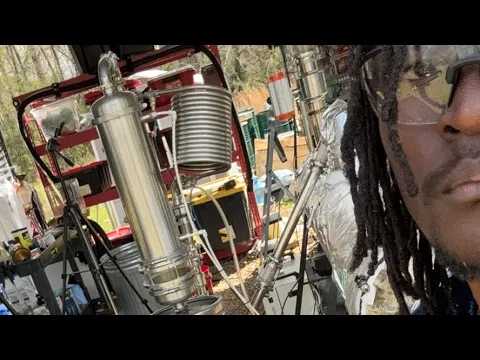
His hands-on experience in welding was crucial in building the first Plastoline prototypes using repurposed parts and handcrafted solutions.
The initial models were assembled at home and designed to run on solar power, reducing operating costs.
Use of microwaves and a focus on innovation.
In November 2024, Julian explained that converting plastic into fuel, such as gasoline, already existed, but he sought to innovate by employing microwaves in the process.
According to him, microwave pyrolysis still has very specific applications on an industrial scale and in continuous operation, which represents a significant technical challenge.
The stated goal of the project is to make this technology viable on a large scale, while maintaining stable and repeatable operation over time.
Julian stated that he was aware of the risks involved, describing the development as a dangerous innovation that required extensive and little-seen work.

Public outreach and engagement
Plastoline's journey gained visibility when Julian started sharing instructional videos and technical updates on social media.
The publications detailed the project stages, the scientific principles involved, and the challenges faced during the construction of the experimental prototypes.
As a result, he amassed millions of followers interested in both the technology and the proposal to tackle the global plastic problem.
Direct and didactic communication helped to broaden the reach of the invention among audiences outside the traditional academic environment.
Philosophy and vision of the inventor
Julian stated that his mission was to show that anyone can contribute to solving global problems, regardless of their scale.
He defended the idea that individual potential needs to be developed through faith, hard work, and practical experience accumulated over time.
This vision guided the decision to move forward with Plastoline, even in the face of initial technical risks and resource limitations.
The project began to be presented not only as a technology, but as an example of accessible innovation outside of institutional environments.
Business structure and financing
To advance development, Julian founded the startup. NatureJab, created with a focus on the expansion of Plastoline.
The company was conceived to structure tests, improve equipment, and enable future continuous commercial-scale production.
At the same time, he launched a crowdfunding campaign on the platform. GoFundMe with a target of US$1 million.
As of July 29, 2025, the campaign had raised US$30.897, an amount earmarked for the technical and structural advancement of the project.
As a further detail, Plastoline remains in experimental development, bringing together principles of waste reuse, alternative energy, and applied technological innovation.

Comments
Post a Comment